5:41 AM
 Kat
Kat
 For more than a decade, Edie Adams appeared in magazine ads and television commercials as the pitch-lady for Muriel cigars. Clad in a sequined, low-cut dress, the blonde temptress taunted men with her scintillating come-on line, “Why don’t you pick one up and smoke it sometime?” More popular was the commercial in which Adams pitched the 10-cent cigars by breathily singing, “Hey, big spender, spend a little dime with me.”
 At a time when consumerism was booming across the nation, the advertising industry persuaded Americans to purchase new products as a sign of status. Smoking was considered “sexy” and “fashionable,” and the sensual Adams used television to propel her career as a singer, Broadway, television and film actress and comedienne.
Born on April 16, 1927 in Kingston, Edith Elizabeth Enke was the daughter of Sheldon and Ada Adams Enke. The family relocated to Grove City and eventually to Tenafly, N.J., where Edie finished high school. Her mother taught her to sing and play the piano and she refined these talents as a youngster with the Grove City Presbyterian Church choir.
Edie’s passion for music inspired her to earn a vocal degree from the Julliard School of Music before matriculating to the Columbia School of Drama. She also studied at the Actor’s Studio in New York and the Traphagen School of Fashion Design, where she became adept at designing and sewing.
Uncertain about pursuing a career in fashion design or music, Adams cast her fate to serendipity. She solidified her singing reputation on the nightclub circuit and appearing in such stage shows as “Blithe Spirit” and “Goodnight Ladies.”
In 1950, she won the “Miss U.S. Television” beauty contest, which led to an appearance on the Milton Berle Show. Adams’ big break came shortly after when she appeared on Arthur Godfrey’s Talent Scouts. Although she didn’t win the contest, she was discovered by the producer of the Philadelphia-based Ernie Kovacs Comedy Show. The producer envisioned her as a seductive “straight man” who could mesh well with the zany comedian.
Adams began working regularly in television with Kovacs, who was outrageously funny. The show, which was live and unrehearsed, was groundbreaking in the new medium of television.
Edie developed an exceptional talent for impressions, imitating celebrities like Marilyn Monroe, Mae West and Zsa Zsa Gabor. The duo performed such hilarious skits as “Ernie in Kovacsland” (1951) and “Kovacs on the Korner” (1952). But the show was short-lived, being too progressive for mainstream audiences.
Kovacs and Adams married on Sept. 12, 1954 and became a popular couple in the Hollywood social circuit in the late 1950s. The husband-wife team revived their careers in a comedy series, winning Emmy nominations for best performances in 1957. In 1960, the duo portrayed themselves as the guest stars in the final Lucille Ball-Desi Arnaz hour-long TV special.
After Kovacs was killed in a 1962 car accident, Adams was left with his significant gambling debts. Instead of filing bankruptcy, however, she worked her way out of debt and, in the process, her career received a second wind.
She returned to the nightclub circuit, recorded albums and toured the country in various dramatic and musical comedy vehicles including “Rain” (as Sadie Thompson), “Bell’s Are Ringing,” “Annie Get Your Gun” (as Annie Oakley), “I Do! I Do!”, “Anything Goes” and “Bus Stop.”
Adams also played supporting roles in several films, including the bitter secretary of two-timing Fred MacMurray in the Oscar-winning film The Apartment (1960) and the wife of presidential candidate Cliff Robertson in 1964′s The Best Man.
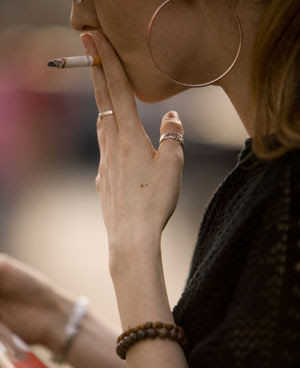
More than anything, however, Adams was known for pitching Muriel cigars to television audiences. In the 1950s and 1960s, cigarette smoking was extremely fashionable. Americans considered the practice “cool” because almost everyone in the public eye smoked, including sports figures, movie stars and singers. And with the popularity of television, viewers in the 1950s and 1960s routinely witnessed their heroes lighting-up. Tobacco companies mounted effective ad campaigns for their products, too. There were “singing cigarettes,” “dancing cigarettes,” movie stars pitching cigarettes, and even actors portraying doctors who promoted the “benefits” of cheap cigarettes in television commercials.
The makers of Muriel cigars cashed in on the craze by employing Edie Adams’ star power during the 1950s and 1960s. Considering that her late husband had been a notorious cigar smoker, who at one time sold Dutch Master cigars on TV, the idea of Edie pitching a slimmer cigar on television was only natural. Dressed in sexy attire, the blonde beauty impersonated the sensual stereotype of Marilyn Monroe. With a wink and a smile, she cooed one of her trademark cigar slogans while holding a box of Muriels in hand. The commercials were smashingly successful and highly profitable. What’s more, Edie made sure that she exercised her influence on the direction of the advertisements, providing them with a perfect blend of class, glamour and sensuality.
While growing noticeably heavier in later years, Adams never lost her trademark humor and sex appeal. She made occasional stage appearances in such shows as “The Best Little Whorehouse in Texas,” the female version of “The Odd Couple,” “Hello, Dolly!” and “Nunsense.” She also started her own cosmetic and beauty salon businesses.
Edie had two later marriages, briefly to photographer Martin Mills and then to trumpeter Pete Candoli. She gave birth to two children: a daughter, Mia Susan Kovacs, who was born in 1959 and killed in an automobile accident in 1982, and a son, Joshua Mills.
Because of her 20 years of commercials for Muriel cigars and her successful business ventures, Adams went from being mired in debt after Kovacs’ fatal accident in 1962 to being a millionaire in 1989. Suffering from cancer and losing weight in recent years, Adams died of complications from pneumonia at age 81 in Los Angeles on Oct. 15, 2008.